
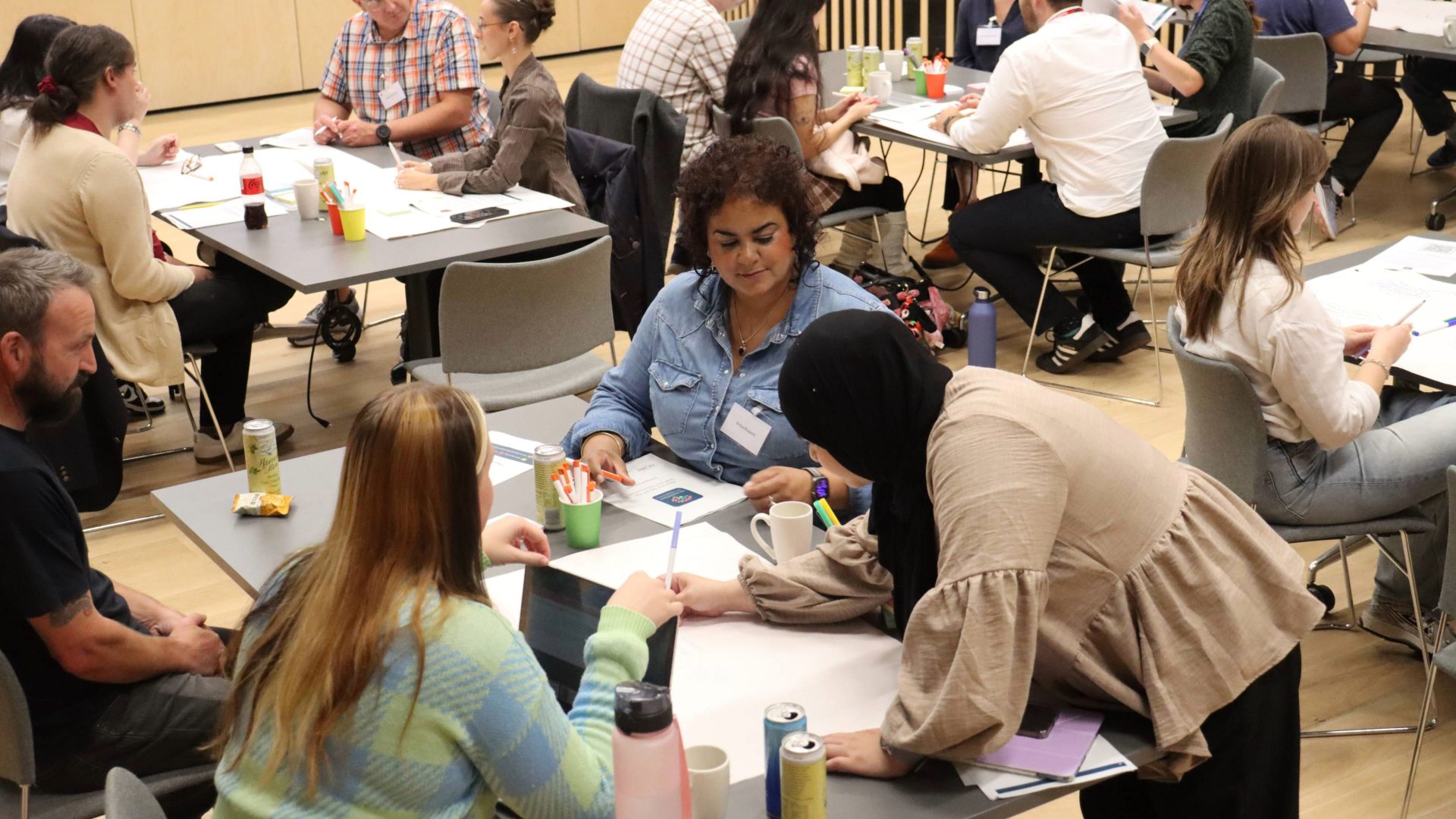
The event brought together participants from the Hub’s flagship Bipolar, Schizophrenia and Psychosis Research Initiative (B-SPRINT) study and researchers working to improve understanding of severe mental health conditions.
The event was designed to ensure that a broad range of people with lived experience continue to directly influence the direction of the Hub’s research and help shape future studies.
A core principle of the Brain and Genomics Hub is that research should be informed by those most affected by the conditions it studies.
The event was organised by Dr Sophie Legge, Professor Tania Gergel, Georgia Dash, and Olivia Hadfield.
Alongside the Hub’s research leads and members of the specialist Lived Experience Advisory Panel, study participants were invited to share their perspectives on a range of projects from the Hub’s early career researchers. The projects are exploring a variety of areas relating to schizophrenia, schizoaffective disorder, bipolar disorder and psychosis.
Professor Neil Harrison, research co-lead of the Brain and Genomics Hub alongside Professor James Walters, opened the event and welcomed guests to the afternoon workshop, held in the sbarc | spark building. Professor Harrison thanked everyone for coming along and for their ongoing input which makes a vital difference to how the Hub team shape their work.
Professor Tania Gergel, public involvement lead at the Hub, then led the two-hour session. Professor Gergel explained how the afternoon would run and highlighted the importance of meaningful collaboration between researchers and people with lived experience.
Professor Gergel said:
“Research is transformed by people living with conditions we are studying.
“Our study participants and lived experience experts are helping us create a research community who contribute, shape and work in partnership with our endeavours here at the Hub, supported by our charity partners, Adferiad and Bipolar UK.
“I have bipolar and am part of the Hub’s leadership team, showcasing how lived experience is embedded across the Hub at every level.
“The Hub’s ongoing collaboration with a wide range of lived experience experts is especially helpful to our early career researchers (ECRs) as they develop early ideas in the own PhD research projects.”
Showcasing early career research
Throughout the afternoon, six Hub-based ECRs presented their work and invited feedback from attendees on key questions relevant to their projects.
Olivia Hadfield discussed how her project will use the wide range of data collected as part of B-SPRINT to identify groups of people who are similar biologically even though they have different mental health diagnoses. This could help find better ways to classify mental health conditions and to develop better treatments.
Lowri Evans discussed her project which aims to find out whether looking at shared symptom patterns, rather than someone’s diagnosis alone, can better predict how a person’s condition develops and what treatment might help.
Dr Cameron Watson shared his research which explores cognitive difficulties, including problems with memory and attention, in people experiencing psychosis. Using long-term clinical data, he is examining cognition the first time someone experiences psychosis and how it changes over the following years. This will identify factors that could help protect or improve cognition over time.
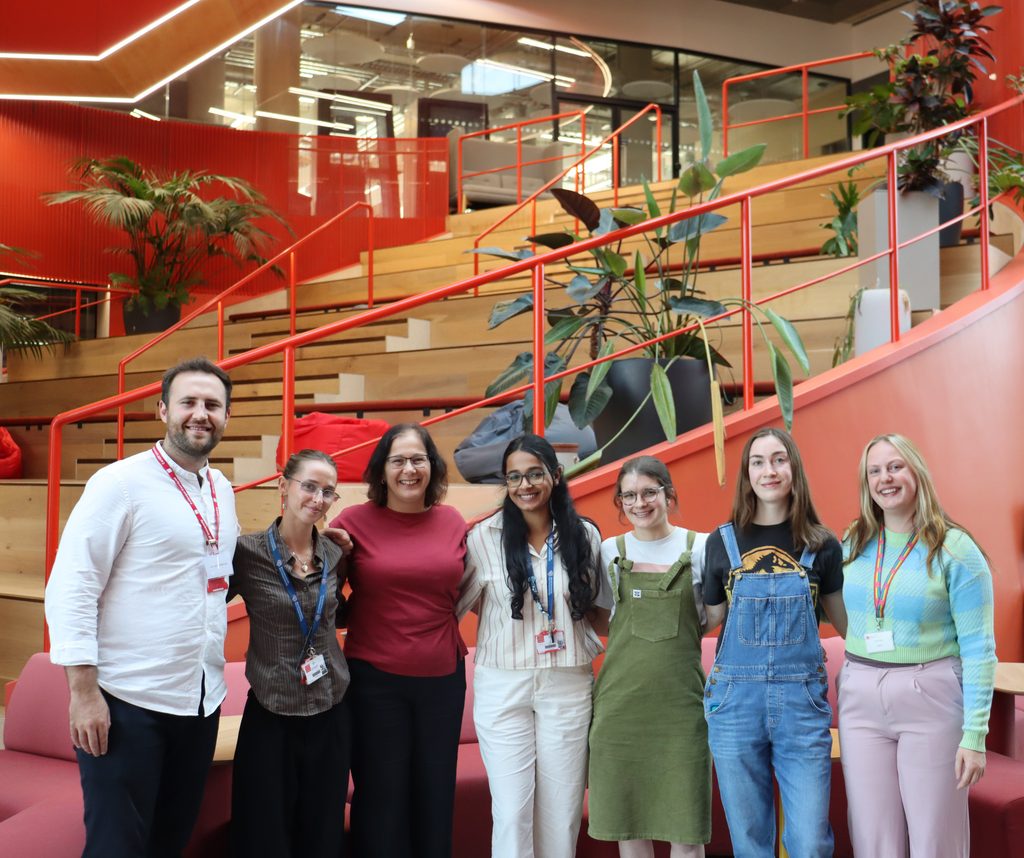
The Brain and Genomics Hub early career researchers and Professor Tania Gergel (L-R: Dr Cameron Watson, Lowri Evans, Professor Gergel, Soumita Ramesh, Olivia Hadfield, Regan Mills and Lainya Knopik.
Regan Mills’ research explores activity within the striatum, an area of the brain involved in motivation, learning and decision making. Decades of research show that striatal brain activity is altered in psychosis, but we don’t yet know how these changes relate to symptoms and treatment response in different people. The project will use a machine learning model to determine whether patterns of brain activity can help predict symptoms, treatment response and psychosis risk.
Soumita Ramesh presented work exploring iron regulation in the brain across schizophrenia, schizoaffective disorder and bipolar disorder. Using advanced MRI techniques, her research will investigate whether differences in brain iron levels are linked to symptoms, cognition and long-term illness trajectories. In the future, this could help us better understand what’s happening in the brain’s biology that might contribute to these disorders.
Lainya Knopik introduced a project using a new type of brain scanning technology (MEG) to study formal thought disorder, a symptom characterised by disorganised thinking and speech. The research aims to identify biological markers that may improve diagnosis and understanding of these experiences.
The Hub ECR team said: “We had an insightful afternoon and really appreciated the useful conversations with attendees.
“We’d like to thank everyone for their honesty and engagement with discussions about our projects – it has given us lots to think about and we’re looking forward to continuing to collaborate with the Hub’s public advisors over the coming months as our projects develop.”
The value of lived experience perspectives
Professor Gergel concluded: “This event demonstrated the importance of involving people with lived experience throughout the research process.
“ By working collaboratively and creating opportunities for study participants to become part of our wider research team, researchers can better understand the challenges people face, identify priorities for future studies and help ensure that research leads to meaningful improvements in care and support.
“We would like to thank everyone who attended and generously shared their experiences, perspectives and expertise. Their contributions will play an important role in shaping the future direction of research within the Brain and Genomics Hub.”
Take part in research
The Brain and Genomics Hub are building a community of 600 people to improve treatment and care for people living with bipolar disorder, psychosis, schizophrenia and schizoaffective disorder.
To take part, you’ll visit the Hub team in Cardiff and receive £120 on completing the study.
If you’ve experienced any of these conditions, please visit the Brain and Genomics Hub website to find out more.